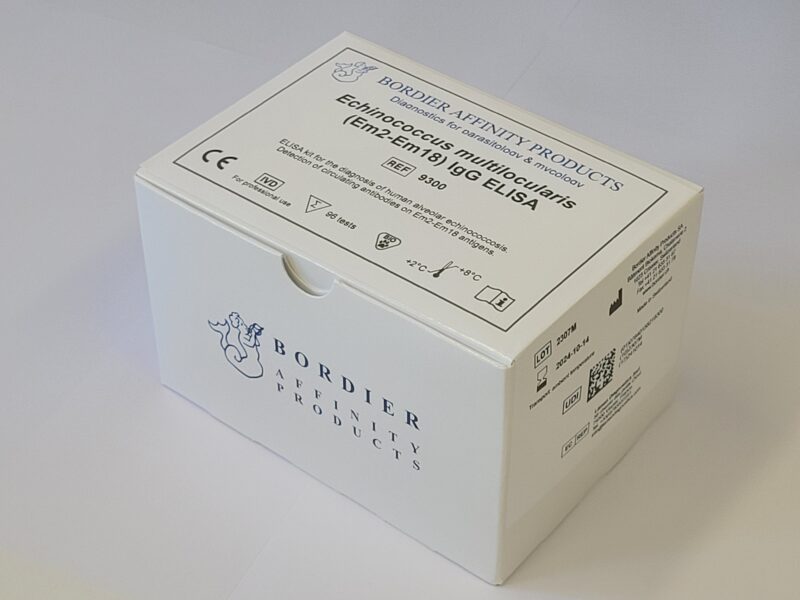
Echinococcus multilocularis (Em2-Em18) IgG ELISA Kit, tap a thumbnail to see more views.
Echinococcus multilocularis (Em2-Em18) IgG ELISA Kit
Alveolar echinococcosis is caused by an infection with the cestode Echinococcus multilocularis and is a very dangerous disease for humans. Adult worms mature in the intestine of the definitive host (usually fox, occasionally dog or cat) and the eggs are released in the feces. Accidental ingestion of soil, berries or vegetables contaminated with eggs iniate the infection in humans. Oncospheres hatch in the duodenum, penetrate the intestine and are carried via the bloodstream to organs. Although alveolar hydatid cysts have been found in other tissues, the most common site of development is the liver. The cysts are not limited by a membrane but penetrate the tissues and may resemble a slow growing carcinoma. Surgical removing is difficult but drugs have been found that stop the development of the metacestode. Medical imaging and serology give both useful and complementary information on the nature of the cyst and on the outcome of treatment.
Quote-based, no public pricing. Add to your quote and our specialists put together a proposal with the right documentation, typically within 24 hours.
This kit in detail
- High sensitivity detection of E. multilocularis
- 8-wells polystyrene breakable strips
- IVDR certified
- Detection of antibodies in the serum of humans
ELISA kit for the diagnosis of human alveolar echinococcosis (screening)
96 determinations of IgG antibodies using standard methodologies.
Wells sensitized with affinity purified and recombinant antigens (Em2-Em18) from Echinococcus multilocularis.
8-well polystyrene breakable strips : useful and economic format for laboratories with a small workload.
CE registration: H-CH/CA01/IVD/01757
Sensitivity of 83% on alveolar echinococcosis (E. multilocularis).
Specificity of 98% (blood donors from Switzerland, cancer patients, … ).
Cross-reactivities :
~7% with other parasitoses.
~16% with hydatidosis (E. granulosus).
96 wells coated with Echinococcus multilocularis Em2-Em18 antigens.
Dilution buffer (TBS-Tween), 50 ml
Washing solution, 50 ml
Enzyme buffer, 50 ml
Stop solution, 25 ml
Negative control serum (rabbit), 200 µl
Cut-off serum (rabbit), 200 µl
Positive control serum (rabbit), 200 µl
Protein A – AP conjugate, 300 µl
Alk. phosphatase substrate, 20 tab.
Multipipette resevoir 25ml, 1x
Frame for ELISA 8-wells holder, 1x
Instructions for use
Datasheets and regulatory documentation
Everything your quality team needs for evaluation and procurement.
Instructions for Use
Frequently paired with this kit
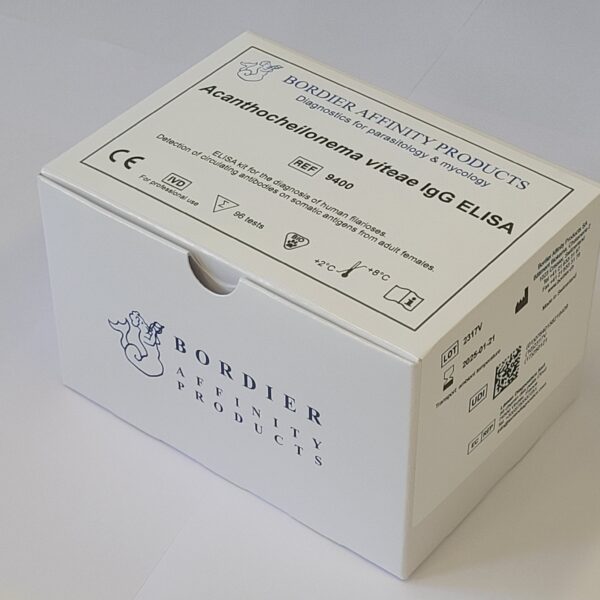
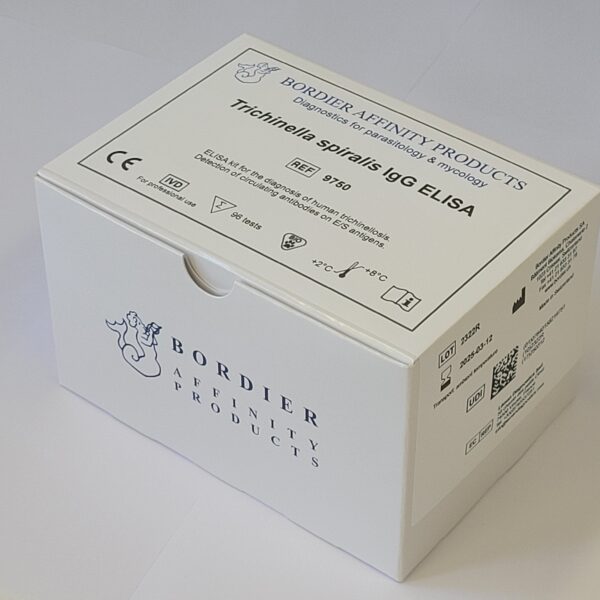
Other assays and instruments lab teams add alongside the Echinococcus multilocularis (Em2-Em18) IgG ELISA Kit.
Add this kit to your quote
Tell us the platforms and throughput you’re planning for and our specialists will put together a clear proposal with the right documentation, no public pricing, just a considered answer.