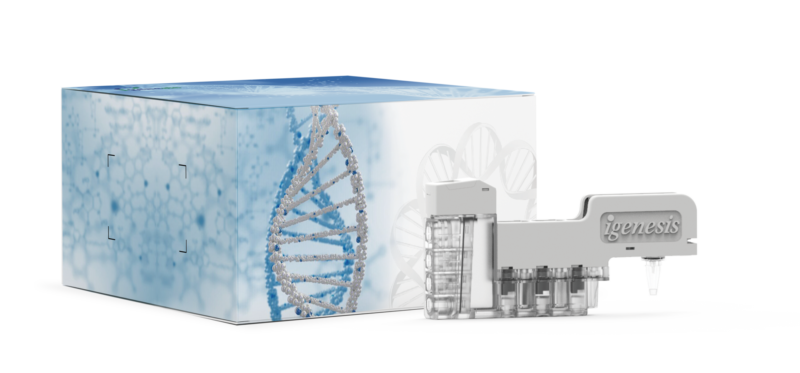
iCassette – Enterococcus and Vancomycin resistance (VRE)
The Igenesis – Enterococcus and Vancomycin resistance (VRE) Detection Kit enables rapid and automated detection of Enterococcus faecalis, Enterococcus faecium, and vancomycin resistance genes vanA and vanB in human urine samples. Using multiplex real-time PCR technology with fluorescence detection, this kit provides accurate differentiation between species and resistance profiles. Designed for use with the Galaxy qPCR platform, it ensures full automation-from nucleic acid extraction to result interpretation-minimizing cross-contamination risks and hands-on time. The panel is a critical tool for clinical microbiology laboratories focused on infection control and antimicrobial stewardship.
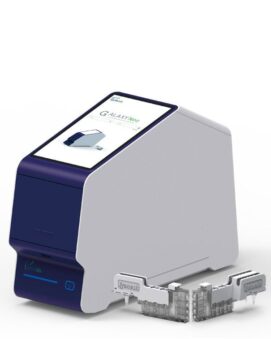 For use with
Galaxy Neo POC qPCR system
See the analyser this kit runs on
For use with
Galaxy Neo POC qPCR system
See the analyser this kit runs on
Quote-based, no public pricing. Add to your quote and our specialists put together a proposal with the right documentation, typically within 24 hours.
This kit in detail
- Detects Enterococcus faecalis, Enterococcus faecium, vanA, and vanB genes in one run
- Fully automated with prefilled iCassettes-no manual extraction needed
- High sensitivity and specificity with internal control verification
- Compatible with Galaxy Nano, Neo, Lite, and Pro instruments
What is the Enterococcus and Vancomycin Resistance Detection Kit?
The iCassette – Enterococcus and Vancomycin resistance (VRE) Detection Kit is a comprehensive molecular diagnostic solution for identifying two of the most clinically relevant species within the Enterococcus genus-E. faecalis and E. faecium-as well as detecting their associated resistance genes, vanA and vanB. These resistance markers are linked to vancomycin-resistant enterococci (VRE), which are among the most common causes of healthcare-associated infections globally.
This PCR-based kit utilizes fluorescence detection to deliver accurate, reliable results from urine samples. It operates exclusively with the fully enclosed Galaxy qPCR instruments, offering closed-system automation that integrates extraction, amplification, and detection within a single-use iCassette.
Role of Enterococcus Targets in Disease
Enterococcus faecalis and Enterococcus faecium are commensal organisms that can cause serious opportunistic infections, particularly in hospitalized patients. These bacteria are implicated in urinary tract infections (UTIs), bacteremia, endocarditis, and wound infections. The rise of antibiotic resistance among these species, especially to vancomycin, has made rapid and accurate detection imperative.
-
vanA: Confers high-level resistance to vancomycin and teicoplanin. It is often plasmid-mediated and transferable between strains.
-
vanB: Confers vancomycin resistance but remains susceptible to teicoplanin. It typically shows variable resistance levels.
Monitoring and identifying these resistance genes help guide infection control strategies and antimicrobial stewardship programs, reducing transmission in clinical environments.
About the iCassette – Enterococcus and VRE Kit
This diagnostic kit is CE-marked for professional in vitro use and contains reagents sufficient for 12 reactions. Each kit includes:
-
Galaxy CS VRE iCassettes with prefilled reagents
-
Lyophilized reagents for PCR, specific primers and probes
-
Internal controls and positive/negative quality control materials
The system targets five fluorescence channels:
-
FAM: E. faecalis (ddl gene)
-
Texas Red: E. faecium (ddl gene)
-
CY5: vanB
-
CY5.5: vanA
-
HEX: Internal control
Results are interpreted based on amplification curves and cycle threshold (Ct ≤ 37), with automatic result reporting via the Galaxy software interface.
Principle and Workflow
The kit leverages multiplex TaqMan fluorescence qPCR in combination with fully enclosed iCassette automation. The workflow follows five streamlined steps:
-
Sample collection: Midstream urine samples (3–5 mL) are collected using sterile disposable cups.
-
Sample preparation: 1,000 µL of sample is added to the iCassette and ultrasonicated (if using instruments without built-in ultrasound).
-
Automated processing: The iCassette is inserted into the Galaxy system, which reads the QR code and automatically runs the extraction, amplification, and detection protocols.
-
Detection and result: The system detects fluorescent signals from all relevant channels and interprets results with internal controls.
-
Analysis and QC: Automatic result generation with visual amplification curves, internal HEX control validation, and quality probe checks.
This design eliminates manual steps and minimizes the risk of contamination, while the internal control ensures test validity for each sample.
Clinical Application
The clinical utility of this kit lies in its ability to support rapid diagnosis and differentiation of VRE infections from simple colonization or other pathogens. In settings where VRE poses a critical threat-such as intensive care units, transplant wards, and long-term care facilities-early identification can:
-
Inform targeted antimicrobial therapy
-
Enable patient cohorting and isolation
-
Reduce nosocomial spread
-
Support surveillance programs and outbreak investigations
By focusing on urine samples, the kit is particularly suitable for diagnosing VRE-associated urinary tract infections, which are among the most common manifestations of enterococcal infections.
Its high analytical sensitivity (LoD: 10³ CFU/mL) and intra-batch precision (CV ≤ 5%) make it a robust choice for routine clinical diagnostics.
https://goffinmoleculartechnologies.com/wp-content/uploads/2024/08/202408141531.mp4Datasheets and regulatory documentation
Everything your quality team needs for evaluation and procurement.
Frequently paired with this kit
Other assays and instruments lab teams add alongside the iCassette - Enterococcus and Vancomycin resistance (VRE).

iCassette - Mycobacterium Tuberculosis and Rifampicin resistance
Add this kit to your quote
Tell us the platforms and throughput you’re planning for and our specialists will put together a clear proposal with the right documentation, no public pricing, just a considered answer.