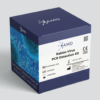
Rabies Virus PCR Kit
The Rabies Virus PCR Detection Kit is a high-performance real-time RT-qPCR assay designed for the qualitative detection of rabies virus RNA in human samples. Built on advanced hydrolysis probe (TaqMan®) technology, the assay enables highly sensitive and specific identification of rabies virus across clinically relevant specimen types. Targeting conserved regions of the rabies virus genome, the kit ensures reliable detection even at low viral loads. An integrated internal control system verifies RNA quality and identifies potential PCR inhibition, ensuring accurate and reproducible results. With optimized one-step RT-qPCR chemistry, hot start technology, and compatibility with widely used real-time PCR platforms, this kit provides a fast, robust, and dependable solution for clinical diagnostics and public health surveillance.
Quote-based, no public pricing. Add to your quote and our specialists put together a proposal with the right documentation, typically within 24 hours.
This kit in detail
- High sensitivity detection down to 10 copies per reaction
- High specificity for accurate rabies virus RNA identification
- Dual-channel detection with internal control (FAM/HEX)
- Ready-to-use one-step RT-qPCR workflow
Qualitative RT-qPCR Detection of Rabies Virus RNA
The Rabies Virus PCR Detection Kit is an in-vitro diagnostic real-time RT-qPCR assay developed for the qualitative identification of rabies virus RNA. The assay utilizes hydrolysis probe technology to amplify and detect specific viral targets with high sensitivity and specificity.
The kit includes a ready-to-use master mix containing primers and probes for rabies virus detection alongside an internal control, enabling simultaneous verification of sample quality and amplification efficiency.
Molecular Background
Rabies is a life-threatening viral disease that causes acute encephalitis in mammals, including humans. It is caused by the rabies virus, a single-stranded RNA virus belonging to the Lyssavirus genus. Transmission typically occurs through the saliva of infected animals, most commonly via bites, although exposure through scratches or mucosal contact is also possible.
Following entry into the body, the virus initially replicates in muscle tissue near the site of infection before entering peripheral nerves. It then travels retrogradely along the nervous system toward the central nervous system. This neuroinvasive progression is a defining characteristic of rabies infection and is responsible for the delayed onset of clinical symptoms.
The incubation period is variable and depends on factors such as the location of the bite, viral load, and host immune response. It typically ranges from 2 to 8 weeks but can extend to several months. During this period, infected individuals are usually asymptomatic, which can delay diagnosis and treatment.
Once the virus reaches the brain, it causes rapid and severe inflammation, leading to neurological symptoms such as agitation, confusion, hallucinations, hydrophobia, and paralysis. At this stage, the virus spreads centrifugally to other tissues, including the salivary glands, facilitating further transmission.
Importantly, once clinical symptoms develop, rabies is almost universally fatal. For this reason, early and accurate molecular detection is critical, particularly in suspected exposure cases, to enable timely intervention and post-exposure prophylaxis before symptom onset.
Assay Performance & Utility
The assay is designed for rapid and reliable detection of rabies virus RNA in a variety of clinical samples, including saliva, serum, cerebrospinal fluid (CSF), and skin biopsies. One-step RT-qPCR enables reverse transcription and amplification in a single reaction, improving workflow efficiency and reducing handling time.
Hydrolysis probe-based detection ensures high specificity, while optimized assay conditions provide robust performance even in low viral load samples. The internal control system confirms RNA integrity and helps detect potential PCR inhibition, supporting confident interpretation of results.
Technical Specifications
- Assay Type: Qualitative Real-Time RT-qPCR
- Target: Rabies Virus RNA
- Detection Channels: FAM (Rabies), HEX (Internal Control)
- Sensitivity: ≥10 copies per reaction
- Sample Types: Saliva, serum, cerebrospinal fluid (CSF), skin biopsy
- Input Material: Extracted RNA
- Technology: One-step RT-qPCR with hydrolysis probe detection
- Compatible Instruments: ABI 7500, QuantStudio series, Bio-Rad CFX, Rotor-Gene Q, LightCycler 480, and equivalent systems
- qPCR Master Mix
- Positive control
- Nuclease-free water
Datasheets and regulatory documentation
Everything your quality team needs for evaluation and procurement.
Documentation available on request, contact us and we will send it over.
Frequently paired with this kit
Other assays and instruments lab teams add alongside the Rabies Virus PCR Kit.
Add this kit to your quote
Tell us the platforms and throughput you’re planning for and our specialists will put together a clear proposal with the right documentation, no public pricing, just a considered answer.