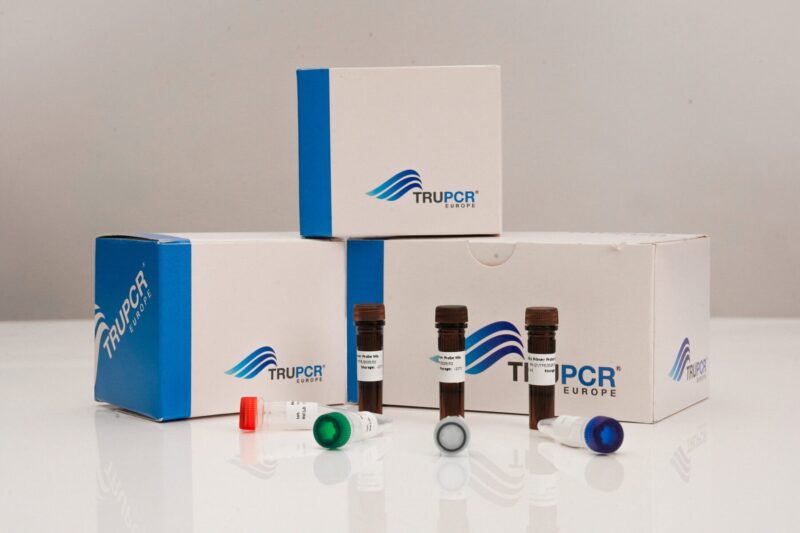
UTI ID Panel Kit, tap a thumbnail to see more views.
UTI ID Panel Kit
The TRUPCR® UTI ID PCR Panel Kit is a multiplex real-time PCR assay intended for the qualitative detection and differentiation of urinary tract infections caused by bacteria and fungi. The kit targets fourteen clinically relevant uropathogens using five dedicated reaction tubes, each containing pathogen-specific primer–probe mixes. The assay is designed for use with processed urine specimens, cultured isolates, or extracted genomic DNA. The panel employs TaqMan® hydrolysis probe chemistry for target-specific detection, enabling high analytical specificity and sensitivity. An endogenous internal control is included in each reaction to assess sample adequacy and monitor for potential PCR inhibition. With a reaction setup that can be performed at room temperature and a total run time of less than one hour, the kit supports rapid molecular identification of single and mixed infections. The assay demonstrates a limit of detection of 1 × 10³ CFU/ml and is validated on commonly used PCR instruments. This configuration provides laboratories with a standardized workflow for reliable identification of major uropathogens in routine diagnostic settings.
Quote-based, no public pricing. Add to your quote and our specialists put together a proposal with the right documentation, typically within 24 hours.
This kit in detail
- Multiplex real-time PCR detection of 14 major uropathogens across five tubes
- Supports detection of single and mixed infections in urine samples or isolates
- Endogenous internal control, UNG carryover prevention, and room-temperature setup
- Run time under one hour and compatible with standard real-time PCR platforms
TRUPCR® UTI ID PCR Panel Kit
The TRUPCR® UTI ID PCR Panel Kit is an in vitro real-time PCR assay developed for the qualitative detection and differentiation of urinary tract infections caused by a defined set of bacterial and fungal pathogens. The kit targets fourteen uropathogens using multiplex primer–probe mixes distributed across five tubes. This design allows simultaneous assessment of multiple organisms within the same workflow. The assay is suitable for clinical laboratories performing molecular identification of uropathogens from urine specimens or cultured isolates.
Clinical Relevance of Uropathogen Targets
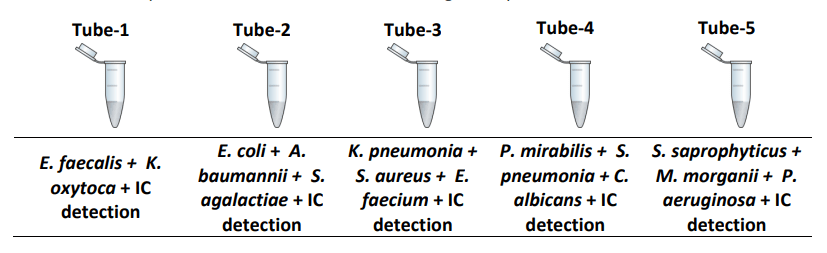
Urinary tract infections are associated with a wide range of bacterial and fungal organisms. The panel includes detection of: Enterococcus faecalis, Klebsiella oxytoca, Escherichia coli, Acinetobacter baumannii, Streptococcus agalactiae, Klebsiella pneumoniae, Staphylococcus aureus, Enterococcus faecium, Proteus mirabilis, Streptococcus pneumoniae, Candida albicans, Staphylococcus saprophyticus, Morganella morganii, and Pseudomonas aeruginosa. These pathogens account for the majority of community-acquired and healthcare-associated UTIs. The assay identifies the genetic material of these organisms but does not provide phenotypic susceptibility data. Results should be interpreted together with culture results, patient history, and other laboratory findings.
About the Assay
The TRUPCR® UTI ID PCR Panel Kit uses TaqMan® hydrolysis probe chemistry for target-specific amplification and fluorescence-based detection. Each reaction tube contains primer–probe mixes tailored to specific pathogen groups, along with an endogenous internal control used to verify sample addition and assess potential PCR inhibition. The workflow is designed for flexibility, allowing use with pre-processed urine, isolated uropathogens, or extracted genomic DNA. UNG is included in the master mix to minimize the risk of carryover contamination, and a hot-start enzyme is used to reduce non-specific amplification.
Principle and Workflow
During amplification, the primer–probe complexes bind to conserved target regions. Taq DNA polymerase cleaves the hybridized probe through its 5′→3′ exonuclease activity, separating the fluorophore from the quencher and generating measurable fluorescence. The fluorescent signal increases proportionally to the accumulation of PCR product, allowing qualitative determination of the presence of specific pathogens.
The workflow includes sample preparation, reaction setup performed at room temperature, amplification on a compatible real-time PCR system, and interpretation of fluorescence curves. The assay uses four different reporter dyes to enable detection of multiple targets across the five tubes. The internal control must amplify correctly to validate each result.
Clinical Application
The TRUPCR® UTI ID PCR Panel Kit is intended for in vitro diagnostic use for identifying the presence of selected uropathogens in human urine. It can be applied to routine testing, evaluation of suspected infections, and detection of mixed pathogen profiles. The panel supports molecular identification but does not replace culture-based susceptibility testing. A negative result does not exclude infection by organisms not included in the panel. All results should be interpreted within the broader clinical and laboratory context.
Datasheets and regulatory documentation
Everything your quality team needs for evaluation and procurement.
Product Catalogus
Frequently paired with this kit
Other assays and instruments lab teams add alongside the UTI ID Panel Kit.
iCassette - 16 High Risk Human Papillomavirus, HPV 16, and HPV 18
Add this kit to your quote
Tell us the platforms and throughput you’re planning for and our specialists will put together a clear proposal with the right documentation, no public pricing, just a considered answer.