FV-PTH StripAssay
The FV-PTH StripAssay is a molecular diagnostic kit designed for the accurate identification of two critical genetic mutations associated with thrombophilia: Factor V Leiden (FV) and prothrombin (PTH) G20210A. Thrombophilia, characterized by an increased risk of abnormal blood clot formation, can have severe health implications. This assay’s three-step methodology, including DNA isolation, PCR amplification, and hybridization, ensures precise mutation detection. With clinical relevance and a focus on patient care, the FV-PTH StripAssay helps healthcare providers to make informed decisions by tailoring treatment strategies to individual genetic profiles.
 Automate on
DYNABLOT Heat
See the instrument that automates this assay
Automate on
DYNABLOT Heat
See the instrument that automates this assay
Quote-based, no public pricing. Add to your quote and our specialists put together a proposal with the right documentation, typically within 24 hours.
This kit in detail
- Thrombophilia Detection
- Genetic Mutation Identification
- Precise Molecular Assay
- Personalized Treatment
Detecting Thrombophilia Risk with the FV-PTH StripAssay®
Thrombophilia is a group of blood disorders characterized by an increased tendency to form abnormal blood clots. It can lead to various complications, including deep vein thrombosis (DVT) and pulmonary embolism (PE). Identifying genetic mutations associated with thrombophilia is crucial for personalized patient care.
Understanding Thrombophilia
Thrombophilia is often caused by genetic mutations that affect blood clotting factors. Two common mutations linked to thrombophilia are Factor V Leiden (FV) and prothrombin (PTH) G20210A. These mutations increase the risk of abnormal blood clot formation, potentially leading to serious health issues.
Methodology
The FV-PTH StripAssay® employs a three-step methodology:
- DNA Isolation: The first step involves isolating DNA from the patient’s sample, typically blood. This DNA contains the genetic information necessary for identifying specific mutations.
- PCR Amplification: Polymerase chain reaction (PCR) is used to amplify the target DNA region. During this step, biotinylated primers are used to label the DNA fragments.
- Hybridization: The amplified DNA is then hybridized to a test strip containing allele-specific oligonucleotide probes. These probes are immobilized as an array of parallel lines on the strip. If a specific mutation is present in the patient’s DNA, it will bind to the corresponding probe on the strip.
- Detection: Bound biotinylated sequences are detected using streptavidin-alkaline phosphatase and color substrates. The presence or absence of mutations is determined based on the color pattern observed on the strip.
Mutations Covered
The FV-PTH StripAssay® is designed to detect two specific mutations:
- FV Leiden (1691G>A; R506Q): This mutation is a well-known genetic risk factor for thrombophilia. It leads to activated protein C resistance and is found in a significant percentage of patients with venous thromboembolism (VTE).
- Prothrombin (PTH; Factor II) 20210G>A: Carriers of this mutation have an elevated risk of cerebral and deep vein thrombosis. When combined with the FV Leiden mutation, the risk further increases. This mutation is associated with increased prothrombin levels.
Conclusion
For thrombophilia diagnosis, the FV-PTH StripAssay® is a valuable asset. Its ability to accurately identify FV Leiden and prothrombin G20210A mutations enables healthcare professionals to assess thrombophilia risk effectively. By understanding a patient’s genetic predisposition to thrombophilia, medical interventions can be tailored to reduce the risk of life-threatening complications, ultimately improving patient outcomes
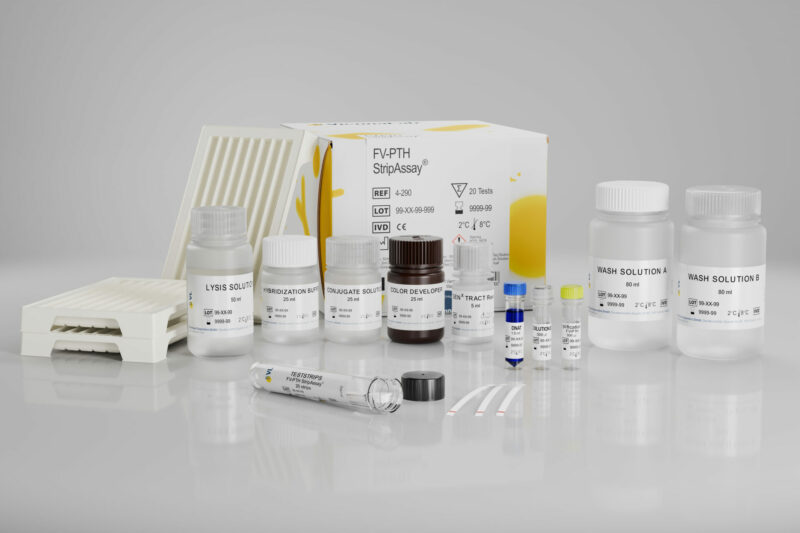
- Lysis Solution (50 ml)
- GENXTRACTTM Resin (5 ml)
- Amplification Mix (yellow cap, 500 µl)
- Taq Dilution Buffer (transparent cap, 500 µl)
- DNAT (blue cap, 1.5 ml)
- Typing Trays (3)
- Teststrips (20)
- Hybridization Buffer (white cap, 25 ml)
- Wash Solution A (white cap, 80 ml)
- Conjugate Solution (25 ml)
- Wash Solution B (80 ml)
- Color Developer (25 ml)
- CollectorTM Sheet
Datasheets and regulatory documentation
Everything your quality team needs for evaluation and procurement.
Instructions for Use
Brochure StripAssays
Frequently paired with this kit
Other assays and instruments lab teams add alongside the FV-PTH StripAssay.

Add this kit to your quote
Tell us the platforms and throughput you’re planning for and our specialists will put together a clear proposal with the right documentation, no public pricing, just a considered answer.