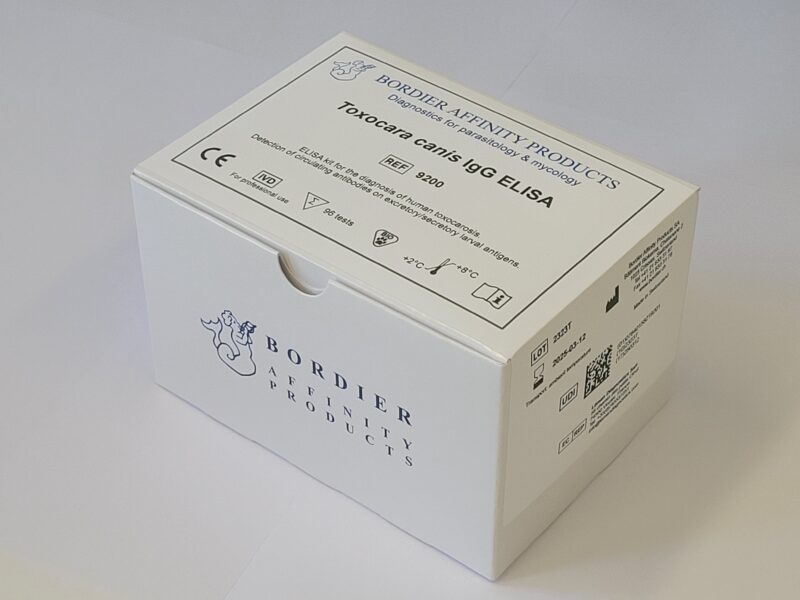
Toxocara canis IgG ELISA Kit, tap a thumbnail to see more views.
Toxocara canis IgG ELISA Kit
Human toxocariasis (visceral larva migrans) is caused by an infection with the round worm Toxocara ssp. larvae. Dogs infected with adult worms release in their feces a large number of infectious eggs into the environment. After ingestion of eggs by the patient, the infecting larvae begin a somatic migration through the inner organs, releasing immunogenic compounds globally known as excretory/secretory (E/S) antigens. Clinical manifestations of toxocarosis include frequently a marked hypereosinophilia and also asthenia, abdominal pain or asthma. Larvae remain most frequently located in the liver and the lungs but can also cause serious ocular damage by migrating into the retina (ocular larva migrans). As the direct detection of larvae is not feasible in humans, a serological assay, on E/S antigens, is presently the most sensitive method available for the diagnosis of toxocariasis.
Quote-based, no public pricing. Add to your quote and our specialists put together a proposal with the right documentation, typically within 24 hours.
This kit in detail
- High sensitivity detection of Toxocara canis
- 8-wells polystyrene breakable strips
- IVDR certified
- Detection of antibodies in the serum of humans and dogs.
ELISA kit for the diagnosis of human toxocariasis
96 determinations of IgG antibodies using standard methodologies.
Wells sensitized with E/S antigens of cultured Toxocara canis larvae.
8-wells polystyrene breakable strips : useful and economic format for laboratories with a small workload.
CE registration: H-CH/CA01/IVD/01755
Sensitivity 91%
Specificity 96% with 500 sera of blood donnors (Swiss).Contacts without any clinical symptoms may have titers between the negative and the cut-off serums.
Specificity 86% with regards to other parasitic infections. Cross-reactivity mainly occur in patients with Trichinellosis, fascioliasis, amebiasis and strongyloidiasis.
The conjugate used in this kit (protein A) allows the detection of antibodies in the serum of humans and dogs.
96 wells coated with Toxocara canis E/S antigens.
Dilution buffer (TBS-Tween), 50 ml
Washing solution, 50 ml
Enzyme buffer, 50 ml
Stop solution, 25 ml
Negative control serum (rabbit), 200 ml
Cut-off serum (rabbit), 200 ml
Positive control serum (rabbit), 200 ml
Anti-human IgG AP conjugate, 300 ml
Alk. Phosphatase substrate, 20 tablets
Multipipette reservoir, 1x
Frame for ELISA 8-wells holder, 1x
Instructions for use
Datasheets and regulatory documentation
Everything your quality team needs for evaluation and procurement.
Instructions for Use
Frequently paired with this kit
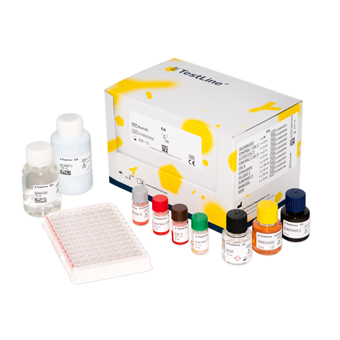
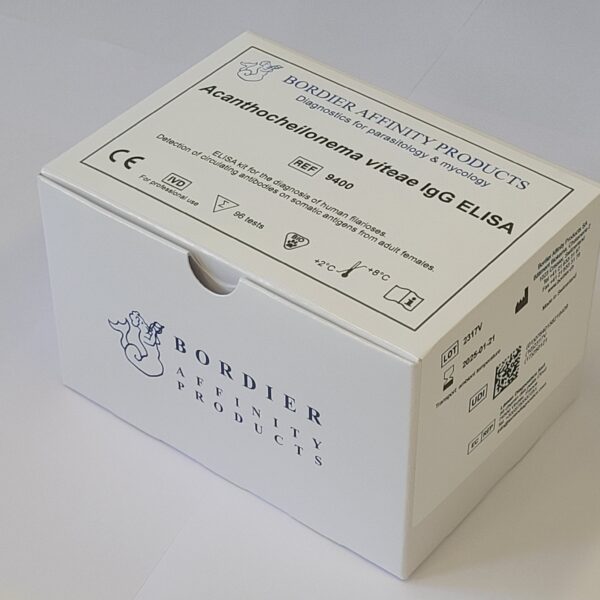
Other assays and instruments lab teams add alongside the Toxocara canis IgG ELISA Kit.
Add this kit to your quote
Tell us the platforms and throughput you’re planning for and our specialists will put together a clear proposal with the right documentation, no public pricing, just a considered answer.