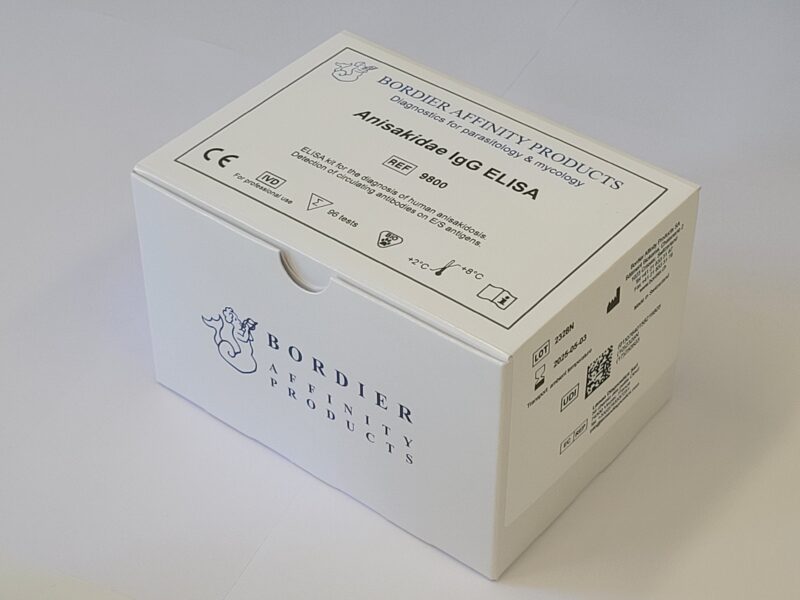
Anisakidae IgG ELISA Kit, tap a thumbnail to see more views.
Anisakidae IgG ELISA Kit
Anisakidosis is caused by some sea fish nematodes of the family Anisakidae. Humans can be infected by eating raw or undercooked contaminated fish meat. Most infected people do not show any symptoms. However, in some cases, symptoms appear at the gastric stage (epigastric pain, nausea and vomiting), intestinal stage (abdominal pain, nausea, vomiting, and diarrhea) or at the allergic stage (hives, pruritus, angioedema and bronchospasm). Diagnosis is based on signs and symptoms, but, in many cases it is not conclusive for the diagnosis. Serological assays has an important place on the final diagnosis of the disease. Our ELISA kit have shown appropriate performances for the serological screening of both digestive and allergic anisakidosis.
Quote-based, no public pricing. Add to your quote and our specialists put together a proposal with the right documentation, typically within 24 hours.
This kit in detail
- High sensitivity detection of Anisakidae
- 8-wells polystyrene breakable strips
- IVDR certified
- Detection of antibodies in the serum of humans
ELISA kit for the diagnosis of human disgestive Anisakidosis
96 determinations of IgG antibodies using standard methodologies.
Wells sensitized with E/S antigens from cultivated larvae of Anisakidae.
8-wells polystyrene breakable strips: useful and economic format for laboratories with a small workload.
CE registration: CH-202201-0009
Sensitivity and specificity:
The test detects IgG antibodies against parasites of Anisakidae family in human serum.
A sensitivity of 97% was found with 38 sera from patients suffering from digestive and/or allergic anisakidosis.
A specificity of 97%was found with 180 sera of blood donors (Swiss).
A specificity of 96%was found with 98 sera from patients of an infectiology unit (Swiss).
A specificity of 86% was found with 43 sera from anisakidosis suspected patients but where this disease had been certainly ruled out.
A specificity of 81% was found with 47 sera of patients with other parasitic infections.
96 wells coated with E/S antigens from cultivated larvae of Anisakidae.
Dilution buffer (TBS-Tween), 50 ml
Washing solution, 50 ml
Enzyme buffer, 50 ml
Stop solution, 25 ml
Negative control serum (rabbit), 200 µl
Cut-off serum (rabbit), 200 µl
Positive control serum (rabbit), 200 µl
Protein A – AP conjugate, 300 µl
Alk. phosphatase substrate, 20 tab.
Multipipette resevoir 25ml, 1x
Frame for ELISA 8-wells holder, 1x
Instructions for use
Datasheets and regulatory documentation
Everything your quality team needs for evaluation and procurement.
Instructions for Use
Frequently paired with this kit
Other assays and instruments lab teams add alongside the Anisakidae IgG ELISA Kit.
Add this kit to your quote
Tell us the platforms and throughput you’re planning for and our specialists will put together a clear proposal with the right documentation, no public pricing, just a considered answer.