Reading ELISA cut-offs in parasitology serology
From plate to call: how to set and interpret cut-offs on a parasitology IgG ELISA, the role of grey-zone results, and what a positive genuinely tells you about exposure versus active disease.
Serology note · Bordier · Leishmania infantum IgG ELISA Kit
Method & sample types
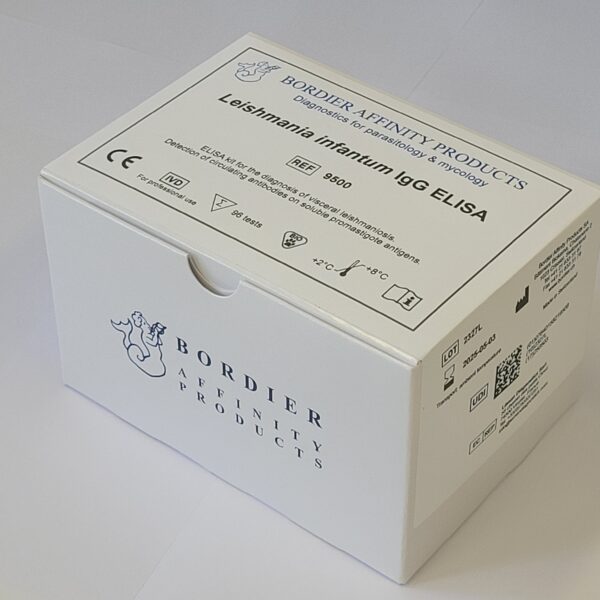
The Bordier Leishmania infantum IgG ELISA Kit detects antibodies to L. infantum from serum or plasma, using a manufacturer-defined cut-off derived from calibrators run on the same plate. Because it is an antibody test, a positive result indicates exposure or past/current infection rather than confirming active disease on its own, the same distinction that applies to IgG serology generally.
Controls & interpretation
Every plate is read against its own calibrators and controls rather than a fixed absorbance value, which corrects for day-to-day and plate-to-plate variation on the reader. Results falling close to the cut-off, the grey zone, should be interpreted cautiously and, where clinically indicated, followed up with a repeat sample or a confirmatory method rather than called as a firm positive or negative on a single borderline value.
Workflow integration
ELISA remains the practical first-line serological screen for leishmaniasis in labs without ready access to molecular testing, and it pairs well with a validated microplate reader already in routine use for other serology panels. Where a patient’s clinical picture is inconsistent with a serology result, a positive with no travel history, or a negative with a strongly suggestive presentation, specialist follow-up (including molecular confirmation) is the appropriate next step rather than repeating the same ELISA.
Products this note applies to
Request a quote or open the product page for the full specification and documentation.
Browse all products